Understanding the Basics of Webpack: A Beginner’s Guide
Webpack is a powerful and widely-used JavaScript module bundler. It plays a central role in modern web development, especially in projects that involve complex JavaScript code, CSS, HTML, images, and other assets. Understanding how Webpack works can greatly enhance your ability to build efficient, optimized web applications. This guide will introduce you to the basics of Webpack, including its core concepts, features, and how to get started using it.
What is Webpack?
At its core, Webpack is a static module bundler for modern JavaScript applications. It takes your code and assets, processes them, and bundles them into one or more optimized output files that are ready for deployment. Webpack helps manage dependencies between various files (JavaScript, CSS, images, etc.) and allows developers to use modern JavaScript features like ES6 modules, code splitting, and more.
Key Features of Webpack:
Module Bundling: Webpack treats everything as a module, including JavaScript files, CSS, images, HTML files, and even JSON. It bundles them together, ensuring that everything is loaded in the right order.
Code Splitting: Webpack can split code into smaller bundles, reducing the amount of JavaScript that needs to be loaded at once. This improves load times and makes your web app more efficient.
Loaders: Loaders are used to transform files before they are bundled. For example, you can use loaders to process CSS files, compile SCSS to CSS, or transpile modern JavaScript (ES6/ES7) into compatible code for older browsers.
Plugins: Plugins extend Webpack’s functionality. They can optimize the build process, minify code, inject environment variables, or even optimize images.
Hot Module Replacement (HMR): This feature allows you to update modules in the browser without needing to refresh the entire page, making development faster and more efficient.
Why Use Webpack?
Optimized Asset Management: Webpack automates the process of bundling and optimizing assets. Instead of manually linking each JavaScript or CSS file, Webpack can handle it for you, making the build process easier and more scalable.
Better Performance: By splitting the code into smaller chunks and only loading the necessary resources on demand, Webpack helps improve the performance of your web application.
Future-Proof Development: Webpack supports the latest JavaScript features and tools, such as ES6 modules, JSX (for React), and more. This allows developers to take advantage of the latest web standards and build scalable applications.
Flexible Configuration: Webpack offers a highly flexible configuration system, allowing developers to customize it to suit the needs of their project.
Core Concepts in Webpack
1. Entry Point
The entry point is the file where Webpack starts the bundling process. It is the first file that Webpack looks for when it begins building your project.
For example, if your main JavaScript file is src/index.js, you would specify this in your Webpack configuration file:
module.exports = {
  entry: './src/index.js',
};
Webpack will then look at index.js and trace all the dependencies that need to be bundled together.
2. Output
The output specifies where the bundled files will be saved and what they will be named. For example:
This configuration tells Webpack to save the output file as bundle.js in the dist directory.
3. Loaders
As mentioned earlier, loaders are used to transform files before they are bundled. For example, you can use a Babel loader to transpile modern JavaScript code to be compatible with older browsers:
module.exports = {
  module: {
    rules: [
      {
        test: /\.js$/,  // Files with .js extension
        exclude: /node_modules/,
        use: 'babel-loader',  // Use babel-loader to transpile
      },
    ],
  },
};
Here, Webpack will use babel-loader to process JavaScript files and convert them into a compatible version for older browsers.
4. Plugins
Plugins are a way to extend Webpack’s functionality. They provide a more powerful and flexible way to customize the build process.
For example, the HtmlWebpackPlugin plugin can generate an index.html file and automatically inject the bundled JavaScript files into it:
const HtmlWebpackPlugin = require('html-webpack-plugin');

module.exports = {
  plugins: [
    new HtmlWebpackPlugin({
      template: './src/index.html', // Use this template for the HTML file
    }),
  ],
};
This ensures that your index.html file always has the correct script tags for the bundled JavaScript files.
5. Development Server
Webpack also has a built-in development server that serves your application and automatically reloads the page when you make changes to the code. This is particularly useful during development.
To enable the development server, you can add the following to your Webpack configuration:
module.exports = {
  devServer: {
    contentBase: './dist', // Serve files from the dist folder
    hot: true, // Enable Hot Module Replacement
  },
};
This will automatically reload the application or update the modules without requiring a full page refresh.
Getting Started with Webpack
Step 1: Install Webpack
The first step is to install Webpack and its dependencies. You can do this by running the following commands in your project directory:
npm init -y  # Initializes a new Node.js project (if you haven't already)
npm install --save-dev webpack webpack-cli
This will install Webpack and Webpack CLI as development dependencies.
Step 2: Create a Webpack Configuration File
Next, create a webpack.config.js file in your project’s root directory. This file will contain all the necessary configurations for Webpack to bundle your assets. Here’s a simple example:
build: This command bundles your project for production, minimizing the files.
dev: This command starts the Webpack development server.
Step 4: Run Webpack
Now you can run Webpack using the following commands:
To build the project for production: npm run build
To start the development server: npm run dev
Conclusion
Webpack is an essential tool for modern web development, enabling developers to bundle and optimize assets efficiently. While it may seem complex at first, understanding its core concepts such as entry points, output, loaders, plugins, and the development server will give you a solid foundation for working with Webpack. By mastering Webpack, you’ll be able to create faster, more scalable web applications and streamline your development workflow.
Investing in cryptocurrencies continues to attract a lot of people. Both seasoned investors and curious newcomers, thanks to its potential for substantial returns. However, the crypto market and its financial assets remains highly unpredictable. Making it essential for anyone considering an investment to approach it with thorough knowledge and caution. This guide walks you through the 12 essential steps to investing in cryptocurrency in 2025, helping you understand not only the opportunities but also the risks that come with this digital asset class. Cryptocurrency explained with The Schicht!
1. Understanding the Fundamentals of Cryptocurrency
Before making any investment decisions, it’s crucial to develop a strong grasp of what cryptocurrencies actually are. In essence, cryptocurrencies are digital or virtual currencies secured by cryptographic technology. Unlike traditional money issued by central banks, they function on decentralized networks, usually powered by blockchain technology. This decentralized nature allows transactions to be secure, transparent, and resistant to tampering.
The cryptocurrency landscape consists of various types of assets. Bitcoin (BTC), created in 2009, remains the most well-known and widely held digital currency. Other cryptocurrencies such as Ethereum (ETH) go beyond just being a digital coin, providing a platform for decentralized applications and smart contracts. In addition to these market leaders, stablecoins have emerged as a less volatile option, pegged to traditional fiat currencies like the US dollar to maintain stable value. Beyond these, a multitude of altcoins—any cryptocurrency other than Bitcoin—offer investors additional choices, with projects like Cardano (ADA), Solana (SOL), and Polkadot (DOT) gaining traction.
2. Conducting Thorough Market Research
To succeed in the crypto space, staying informed is not optional—it’s essential. The cryptocurrency market is notorious for rapid price swings influenced by technological advances, regulatory developments, and global economic shifts. Reliable sources such as CoinDesk, CoinTelegraph, and The Block provide regular updates, analysis, and breaking news that can guide your investment decisions.
In addition to following news, understanding blockchain technology itself will give you a competitive edge. Knowing how distributed ledgers work, what makes certain blockchains faster or more secure than others, and how consensus mechanisms function will help you assess the value and potential of different projects. Whenever you’re considering investing in a particular coin or token, reading its whitepaper is a must. This document outlines the project’s purpose, technology, governance, and long-term vision.
3. Selecting a Secure and Reliable Cryptocurrency Exchange
Your entry point into the world of cryptocurrency is typically a crypto exchange, so choosing the right platform is critical. Exchanges like Binance, Coinbase, Kraken, Gemini, KuCoin, and OKX each offer varying features, from beginner-friendly interfaces to advanced trading options and diverse coin selections. Security is paramount when selecting an exchange. Look for platforms that offer robust protections like two-factor authentication (2FA), cold storage options, and strong regulatory compliance.
Binance: One of the largest exchanges offering a wide variety of cryptocurrencies.
Coinbase: User-friendly for beginners, with a good selection of cryptocurrencies.
Kraken: Known for security and transparency.
Gemini: Regulated exchange with a focus on compliance.
KuCoin & OKX: Offer additional altcoins and trading features.
4. Setting Up Your Account and Ensuring Security
To open an account with a cryptocurrency exchange, you will usually need to complete a KYC (Know Your Customer) procedure. This involves submitting personal identification documents to meet regulatory requirements and protect against money laundering. It is particularly important to take the time to set up strict security measures for the crypto account after verification. As this is not physical money, but a digital currency, complex passwords should be used. In addition, 2FA should always be activated to create an additional layer of security.
5. Funding Your Account for Your First Investment
With your account ready, the next step is to fund it. Most exchanges allow deposits via bank transfers, credit and debit cards, and even services like PayPal in some cases. If you already own cryptocurrency, you can also transfer it directly to your exchange wallet. Be sure to check the fees associated with each deposit method, as they can vary significantly.
6. Which investment strategy is the right one?
Unfortunately, investing in cryptocurrencies is not a one-size-fits-all solution and requires careful research. The best-practice approach here should always match your financial goals, risk tolerance and level of experience. Many long-term investors follow a strategy known as “HODLing”. Here, digital assets are acquired and held for years regardless of market fluctuations. This strategy works best for those who strongly believe in the future of blockchain technology and certain projects.
Short-term trading is another option, but it requires a much deeper understanding of technical analysis, chart reading and market timing. This approach can also be profitable, but is much riskier due to the extreme volatility of the crypto markets. Dollar-cost averaging (DCA) is a practical alternative for a more balanced strategy. With this method, a fixed amount is invested at fixed intervals. This helps to even out price fluctuations over time and reduces the risk of investing everything at an unfavorable price.
7. Diversification of the portfolio. Why is this so important?
Putting all your assets into a single cryptocurrency is a risky bet. No matter how promising that asset seems. Diversification therefore helps you mitigate this risk by spreading your investments across different types of assets. A balanced portfolio could include a mix of established coins such as Bitcoin and Ethereum as well as smaller altcoins with growth potential.
Stablecoins can also be part of your portfolio, as they offer a safe haven in times of market turbulence. In addition to traditional cryptocurrencies, you should also consider decentralized finance (DeFi) protocols, non-fungible tokens (NFTs) and staking options as they can offer further opportunities to increase returns.
8. Safeguarding Your Cryptocurrency Holdings
Once you’ve acquired your digital assets, protecting them is just as important as choosing the right investments. Hot wallets, which are connected to the internet, provide convenient access for regular trading, but they are more vulnerable to hacking. Popular options include MetaMask, Trust Wallet, and Coinbase Wallet.
For long-term storage, cold wallets offer far superior security. These hardware devices, such as Ledger Nano X or Trezor, store your private keys offline, making them virtually immune to online attacks. Regardless of the storage method you choose, always create secure backups of your private keys and recovery phrases, as losing these could mean losing your assets permanently.
9. Monitor Your Investments – Keep your crypto assets safe
Even after making your investments, your work isn’t done. Regularly tracking your portfolio’s performance allows you to make informed adjustments if market conditions change. Apps and platforms like CoinMarketCap and CoinGecko offer powerful tools for tracking prices, volumes, and market trends. Setting up price alerts can also help you respond quickly to significant market movements.
In addition to watching prices, periodically review your overall investment strategy. If your initial assumptions about a project’s potential have changed or new opportunities arise, don’t hesitate to rebalance your portfolio accordingly.
10. Understanding the Tax Implications of Crypto Investing
Cryptocurrency taxation has become increasingly regulated in many countries. In most jurisdictions, profits from selling, trading, or spending cryptocurrencies are subject to capital gains taxes. Even activities like earning staking rewards or receiving airdrops could have tax implications.
Given the complexities of crypto taxation, it’s highly recommended to consult with a tax professional who has experience in the digital asset space. They can help you understand reporting requirements, minimize your tax liabilities, and ensure full compliance with local laws.
11. Risks and Precautions regarding Cryptocurrencies
Investing in cryptocurrency is not without significant risk. The extreme volatility of prices can lead to substantial losses, especially for inexperienced investors. Regulatory changes also pose potential threats, as governments around the world continue to refine their approaches to crypto oversight. Scams and fraudulent schemes remain prevalent, so it’s critical to stay vigilant, use only reputable platforms, and never share your private keys with anyone.
12. Staying Informed and Embracing Lifelong Learning with Cryptocurrencies
The crypto world evolves rapidly, so ongoing education is vital for long-term success. Join online communities such as Reddit’s cryptocurrency forums, follow thought leaders on Twitter, and engage in discussions on platforms like Discord. These communities provide valuable insights, real-time updates, and a sense of the broader sentiment within the market.
Finally, make it a point to explore emerging sectors within crypto, including decentralized finance (DeFi) and non-fungible tokens (NFTs). These rapidly growing areas represent both innovation and investment potential, and staying informed will position you to take advantage of new opportunities as they arise.
Final thoughts on Cryptocurrency
Cryptocurrency investing in 2025 offers tremendous potential, but success requires preparation, caution, and ongoing learning. By thoroughly researching the market, choosing secure platforms, developing a clear investment strategy, and continuously staying informed, you can navigate the complexities of crypto investing with confidence. Remember, patience and disciplined risk management will always be your strongest assets in this unpredictable yet exciting financial frontier.
This usually depends on what you have invested in. Cryptocurrencies offer high profit opportunities, but also high risks. The market is very volatile, so prices fluctuate greatly. For experienced investors or people with a high risk tolerance, cryptocurrencies can be very interesting. On the other hand, security-conscious investors may be less interested.
What is an example of crypto currency?
A very well-known example is Bitcoin. As the first cryptocurrency ever, it is by far the best-known digital currency today. Other well-known cryptocurrencies are Ethereum, Ripple (XRP) and Solana.
Is Cryptocurrency real money?
Cryptocurrency is digital money that exists online. It is not issued by a government, financial institutions, or the central bank. Whether it is considered “real money” depends on who you ask. In some countries it is already recognized as an official means of payment (e.g. El Salvador with Bitcoin), in others it is only considered a digital asset. Incidentally, you can easily process your crypto transactions with one of the many providers, such as Binance or Kraken.
How does cryptocurrency work?
Cryptocurrencies are based on blockchain technology. This is a kind of digital ledger that stores all transactions transparently and tamper-proof. The coins or tokens are transferred directly between users – without a bank in between. Security is guaranteed by cryptography (encryption). In addition, your cryptocurrency is stored in a digital wallet.
Which one was the first cryptocurrency?
The first and oldest cryptocurrency is Bitcoin. It was published in 2009 by a person or group under the pseudonym Satoshi Nakamoto. Bitcoin is still the best-known and most valuable cryptocurrency in the world today. The idea behind it was to create a digital payment system that works without banks (or the central bank) and is completely decentralized.
Phishing and Credit Card Scams: How to Protect Yourself from Fraud
In today’s digital world, where online transactions and virtual communication are increasingly common, scams have become a prevalent and growing issue. Among the most dangerous of these scams are phishing and credit card fraud, which continue to target millions of people globally. In this article, we will explore what phishing and credit card scams are, how they work, and most importantly, how you can protect yourself from becoming a victim.
What is Phishing?
Phishing is a type of cybercrime where criminals impersonate legitimate organizations or individuals in an attempt to deceive people into divulging sensitive information, such as login credentials, personal identification numbers (PINs), or credit card details. This is usually done through fraudulent emails, text messages, or phone calls that appear to be from trusted sources, like your bank, social media platforms, or online retailers.
Phishing attacks often come disguised as urgent requests, asking you to confirm account information, reset passwords, or verify payment details. These messages are usually designed to make the victim feel anxious or threatened, prompting them to take action without thinking. Once the victim falls for the scam and provides their personal information, the scammers can then use it to commit identity theft, steal money, or access other accounts.
Types of Phishing Scams
Email Phishing: The most common form of phishing, email phishing involves sending fraudulent emails that appear to come from reputable companies. These emails typically include fake links that lead to websites designed to collect your personal information.
Spear Phishing: Unlike general phishing, spear phishing targets specific individuals or organizations. Scammers may research their victim’s social media profiles or work details to craft more personalized and convincing messages.
Vishing (Voice Phishing): Vishing involves fraudulent phone calls or voice messages that trick victims into providing sensitive information, such as credit card numbers or Social Security numbers.
Smishing (SMS Phishing): Similar to vishing, smishing uses text messages to trick victims into clicking on malicious links or giving up personal data.
Pharming: This is a more advanced form of phishing where cybercriminals manipulate DNS (Domain Name System) settings to redirect victims to fraudulent websites without their knowledge. These websites appear identical to legitimate ones, making it easier to steal sensitive information.
What is Credit Card Scamming?
Credit card scamming is a type of financial fraud where criminals illegally acquire or steal credit card information and use it for unauthorized purchases or transactions. This can be done through various methods, such as hacking into databases, stealing physical credit cards, or exploiting unsecured online payment systems.
There are several types of credit card scams, each of which poses different threats to consumers:
Stolen Card Information: Cybercriminals may steal your credit card information through data breaches, phishing attacks, or even physical theft. They then use the information to make online purchases or commit fraud.
Card Not Present Fraud (CNP): This form of fraud occurs when criminals use stolen credit card information to make online purchases where no physical card is required. CNP fraud is prevalent in e-commerce transactions, where merchants may fail to implement strong security measures like multi-factor authentication.
Skimming: Skimming involves using a small device (skimmer) to secretly copy the information stored on your credit card’s magnetic strip. Criminals often install these devices on ATMs, point-of-sale terminals, or gas station pumps, where unsuspecting victims swipe their cards.
Application Fraud: Criminals may also apply for new credit cards using stolen personal information, a practice known as application fraud. Once approved, they use the card to make unauthorized purchases.
Friendly Fraud: This type of fraud occurs when a legitimate cardholder makes an online purchase, receives the goods or services, and then falsely claims that the transaction was unauthorized or fraudulent in order to get a refund.
How Phishing and Credit Card Scams Work Together
Scammers often combine phishing tactics with credit card fraud to maximize their profits. For example, they may use phishing emails to steal a person’s credit card information and then use that data for fraudulent transactions. They may also exploit stolen login credentials to access online banking accounts or shopping platforms, making it easier to transfer funds or purchase items using a victim’s credit card.
Phishing attacks may include emails or texts that appear to be from financial institutions, asking you to click a link and enter your card details for verification. Once you provide the requested information, the scammer can use it to commit fraud.
Signs of Phishing and Credit Card Scams
It’s essential to recognize the red flags of phishing and credit card fraud to avoid falling victim to these scams. Here are some common signs to watch out for:
Suspicious emails or messages: Phishing emails may contain spelling or grammar mistakes, incorrect company logos, or untrustworthy-looking links.
Unsolicited requests for sensitive information: Be wary of any unsolicited messages or phone calls asking for your credit card number, PIN, or Social Security number.
Urgent or threatening language: Scammers often use tactics that create a sense of urgency or fear, like claiming your account will be locked or your funds will be lost if you don’t take immediate action.
Suspicious links or attachments: Hover over links before clicking to ensure they lead to legitimate websites. Avoid opening attachments from unknown sources.
Unusual activity on your credit card statements: Regularly monitor your credit card and bank statements for any unauthorized transactions. If you spot something suspicious, report it immediately.
How to Protect Yourself from Phishing and Credit Card Scams
Fortunately, there are steps you can take to protect yourself from phishing and credit card fraud. Here’s what you can do:
Be cautious with unsolicited communication: Avoid clicking on links or downloading attachments from emails, texts, or phone calls from unfamiliar sources. If you’re unsure about a communication’s legitimacy, contact the company directly using a verified phone number or website.
Enable two-factor authentication (2FA): Many online platforms, including banking and e-commerce sites, offer two-factor authentication as an added layer of security. 2FA requires you to enter a second verification code in addition to your password, making it more difficult for scammers to access your account.
Use strong, unique passwords: Use a mix of uppercase and lowercase letters, numbers, and special characters to create complex passwords. Avoid using the same password for multiple accounts.
Install security software: Keep your devices protected by installing antivirus and anti-malware software. Ensure your software is updated regularly to protect against new threats.
Monitor your credit card statements: Regularly review your credit card and bank statements for any unauthorized transactions. If you notice anything suspicious, report it to your bank immediately.
Use virtual credit cards: Some banks and payment services offer virtual credit cards for online purchases. These temporary card numbers are linked to your account but have limited validity, which can help reduce the risk of fraud.
Avoid using public Wi-Fi for financial transactions: Public Wi-Fi networks are not secure and may allow hackers to intercept your data. Use a secure, private connection when making online payments or accessing sensitive accounts.
Be cautious when using ATMs or payment terminals: Check for signs of skimming devices on ATMs or point-of-sale terminals. If you notice anything unusual, avoid using the machine.
Report fraud immediately: If you believe your credit card information has been compromised, contact your bank or credit card provider right away to freeze your account and prevent further damage.
Conclusion
Phishing and credit card scams are serious threats in today’s digital world, and scammers are constantly developing new tactics to exploit unsuspecting victims. However, by staying vigilant, following security best practices, and being cautious with your personal information, you can significantly reduce your risk of falling prey to these scams. By protecting yourself, you’ll be able to enjoy the convenience of online shopping and banking without worrying about fraud or identity theft. Always remember that when in doubt, it’s better to verify than to fall for a scam. Stay safe online!
High-frequency trading (HFT) has become one of the most dominant strategies in modern financial markets. It involves the use of powerful algorithms and high-speed data networks to conduct a large number of trades in fractions of a second. While HFT has contributed to the market’s liquidity, it has also raised significant concerns about its impact on stock markets. In this article, we will explore the various risks that high-frequency trading poses to stock markets and how regulators are addressing these challenges.
What is High-Frequency Trading?
High-frequency trading refers to the use of advanced computer algorithms to execute large volumes of orders at extremely high speeds. HFT is typically associated with institutional investors, such as hedge funds, proprietary trading firms, and investment banks, who have access to sophisticated technology infrastructure. The goal of HFT is to capitalize on small price movements in stocks, bonds, and other financial instruments, which can lead to significant profits over time.
The core feature of high-frequency trading is speed. HFT firms use cutting-edge technology, including co-location (the practice of placing their computers in the same data centers as the exchanges’ systems) to reduce the latency of their trades. By doing so, these firms can execute orders in milliseconds or microseconds, well beyond the capabilities of human traders.
Risks of High-Frequency Trading to Stock Markets
1. Increased Volatility
One of the major risks associated with high-frequency trading is the potential for increased market volatility. Since HFT strategies rely on rapid-fire trades based on algorithms, these trades can cause significant price swings in the short term. For example, during times of market stress or uncertainty, HFT firms may rapidly pull out of positions, triggering a sudden drop in stock prices. This can create a domino effect, where other market participants, such as institutional investors, react to the price movements, amplifying volatility.
A notable example of this occurred on May 6, 2010, when the U.S. stock market experienced a “flash crash.” During this event, the Dow Jones Industrial Average plunged by nearly 1,000 points within minutes, only to recover shortly afterward. While the exact causes of the flash crash are still debated, high-frequency trading is believed to have played a significant role in exacerbating the market’s rapid decline and subsequent recovery.
2. Market Manipulation
Market manipulation is another risk associated with high-frequency trading. Some HFT strategies, such as “quote stuffing” or “spoofing,” involve creating large numbers of fake orders or price movements to trick other market participants into making decisions based on false information. For example, a high-frequency trader might flood the market with large buy orders to create the illusion of increased demand, only to cancel the orders once the price moves in their favor.
While these manipulative practices are illegal, they are difficult to detect and regulate due to the sheer speed and volume of trades involved in high-frequency trading. This makes it challenging for regulators to monitor market activities effectively and ensures that unfair advantages are not being exploited by HFT firms.
3. Lack of Market Liquidity
While high-frequency trading is often credited with improving market liquidity by providing constant buy and sell orders, it can also have the opposite effect. In times of market turmoil, HFT firms may withdraw from the market entirely, leading to a sudden lack of liquidity. This can make it difficult for other market participants to execute trades without causing significant price movements.
When market liquidity dries up, the bid-ask spreads—the difference between the price at which buyers are willing to purchase and the price at which sellers are willing to sell—can widen dramatically. This increases the costs of trading and can make it harder for investors to enter or exit positions without incurring significant losses.
4. Systemic Risk
High-frequency trading also contributes to systemic risk—the risk that the failure of one part of the financial system could cause widespread disruption. Since HFT relies heavily on complex algorithms and automated systems, any error in the code or malfunction in the trading infrastructure can lead to catastrophic consequences. In addition, many HFT firms rely on similar strategies, making the market susceptible to herding behavior.
If a large number of HFT firms simultaneously attempt to exit the market due to a technical failure or sudden shift in market sentiment, the resulting mass liquidation of positions can lead to sharp market declines. This is particularly dangerous in markets where liquidity is already low, as the rapid sell-off can cause a chain reaction that affects a wide range of financial instruments.
5. Unfair Advantage for Institutional Traders
High-frequency trading has been criticized for providing an unfair advantage to institutional investors over retail investors. While institutional investors have the financial resources to invest in the infrastructure necessary for HFT, retail investors do not. This creates a disparity in the market, where large institutional traders can profit from their ability to execute trades at lightning speed, while individual investors are left at a disadvantage.
In some cases, retail investors may find themselves on the losing end of trades due to the actions of HFT firms. For instance, HFT algorithms may be able to detect patterns in retail investors’ orders, allowing them to trade ahead of retail investors and profit from their decisions.
Regulatory Response to HFT Risks
In response to the risks posed by high-frequency trading, regulators around the world have implemented a variety of measures to mitigate its negative impact on stock markets. Some of these measures include:
1. Circuit Breakers
Circuit breakers are temporary halts in trading that are triggered when a market experiences extreme volatility. These breaks are designed to give market participants time to assess the situation and prevent a panic-driven sell-off. Circuit breakers have been implemented on major exchanges, including the New York Stock Exchange (NYSE) and NASDAQ, to curb the potential impact of high-frequency trading during periods of market turbulence.
2. Market Surveillance and Monitoring
Regulators have also increased their efforts to monitor market activities in real-time to detect manipulative practices, such as quote stuffing or spoofing. The U.S. Securities and Exchange Commission (SEC) and other regulatory bodies now require exchanges to implement surveillance systems that can identify suspicious trading patterns and flag them for investigation.
3. Transaction Taxes
Some countries have proposed or implemented financial transaction taxes (FTTs) to discourage high-frequency trading and reduce the volume of short-term speculative trading. For example, the European Union has discussed implementing an FTT on trades involving stocks, bonds, and derivatives. The goal of this tax is to reduce market volatility and prevent excessive speculation, while also generating revenue for governments.
4. Limitations on HFT Strategies
Certain strategies used by high-frequency traders, such as spoofing or layering, are explicitly banned by regulators. In the U.S., the Commodity Futures Trading Commission (CFTC) has pursued legal action against firms that engage in manipulative trading practices. These regulations aim to ensure that market participants operate fairly and transparently, without exploiting the system to gain an unfair advantage.
Conclusion
While high-frequency trading has undoubtedly transformed the landscape of modern financial markets, it has also introduced significant risks that could threaten the stability of stock markets. Increased volatility, market manipulation, liquidity challenges, and systemic risk are just a few of the dangers associated with HFT. As the market continues to evolve, regulators must strike a balance between fostering innovation and protecting market integrity. By implementing safeguards such as circuit breakers, enhanced surveillance, and transaction taxes, authorities can help mitigate the risks associated with high-frequency trading and ensure that financial markets remain fair, transparent, and stable for all participants.
Investors, both institutional and retail, must also remain vigilant, understanding the potential implications of high-frequency trading on their portfolios. With the right approach, it is possible to harness the benefits of HFT while minimizing its risks to the broader financial ecosystem.
The Importance of Cryptography in Finance: Securing the Future of Digital Transactions
In today’s increasingly digital world, the importance of cryptography in finance cannot be overstated. As financial transactions move online and digital currencies like Bitcoin and Ethereum continue to gain prominence, the need for robust security mechanisms has never been more critical. Cryptography is the science of securing information through encryption and decryption techniques, ensuring that data remains private, accurate, and protected from unauthorized access. In the realm of finance, cryptography plays a pivotal role in safeguarding transactions, protecting sensitive data, and maintaining trust in the digital financial ecosystem.
In this article, we will explore the significance of cryptography in the financial sector, its key applications, and how it is shaping the future of finance.
1. Protecting Sensitive Financial Data
One of the most significant concerns in the financial world is the protection of sensitive data. Financial institutions, such as banks, investment firms, and insurance companies, handle vast amounts of personal and financial information, including account numbers, transaction histories, and customer details. Any breach of this data could lead to severe financial losses, identity theft, or reputational damage.
Cryptography provides the tools necessary to protect this data. Through techniques like encryption, financial institutions can convert sensitive data into an unreadable format, ensuring that even if hackers intercept the data, they cannot decipher it without the decryption key. This is especially crucial for online transactions, where large volumes of money are transferred across borders in real-time.
2. Securing Digital Transactions
Cryptography is essential in securing digital transactions, including payments, transfers, and online banking activities. When you make an online payment using a credit card, or send money via a mobile wallet, cryptographic protocols are used to secure your financial information.
For example, the widely used Secure Socket Layer (SSL) and Transport Layer Security (TLS) protocols encrypt data between the user’s browser and the financial institution’s servers. This ensures that sensitive information, such as credit card numbers and bank account details, remains protected during transmission.
In the case of digital currencies, cryptography plays a more direct role in the security of transactions. Cryptocurrencies like Bitcoin and Ethereum rely on public-key cryptography to secure transactions and control the creation of new units. Each user is assigned a private key and a public key: the private key is used to sign transactions, while the public key is used to verify the authenticity of the transaction.
3. Authentication and Authorization
Cryptography is also used to authenticate users and authorize transactions, ensuring that only authorized individuals can access accounts or complete transactions. Multi-factor authentication (MFA) is a common security measure in the financial industry, where users must provide multiple forms of verification before accessing their accounts. This typically includes something the user knows (a password), something the user has (a smartphone or security token), or something the user is (fingerprint or facial recognition).
Cryptographic algorithms are at the heart of these security measures. For instance, when using a one-time password (OTP) for authentication, a cryptographic function generates the OTP, which is then used to confirm the identity of the user.
4. Blockchain Technology and Cryptocurrencies
Blockchain technology, the backbone of cryptocurrencies, is a prime example of how cryptography is transforming the financial industry. A blockchain is a distributed ledger that records transactions in a secure, immutable way. It uses cryptographic techniques like hashing to link blocks of data together, making it virtually impossible to alter previous transactions without detection.
This makes blockchain an attractive solution for financial services such as cross-border payments, remittances, and peer-to-peer lending. Cryptographic hashes ensure that once a transaction is recorded on the blockchain, it cannot be tampered with, enhancing transparency and trust.
In addition to cryptocurrencies, blockchain technology is also being explored for other financial applications, such as smart contracts. Smart contracts are self-executing contracts where the terms of the agreement are written into code and automatically executed when certain conditions are met. These contracts use cryptographic signatures to ensure the authenticity of the parties involved and the integrity of the contract.
5. Preventing Fraud and Cybercrime
Financial fraud and cybercrime are pervasive threats to the integrity of the global financial system. Fraudsters constantly seek new ways to manipulate or steal financial assets, whether through phishing attacks, identity theft, or hacking into financial systems. Cryptography is crucial in preventing such crimes by ensuring that sensitive financial transactions are protected and that unauthorized access to accounts is blocked.
For instance, when you perform an online bank transfer, the transaction is digitally signed with your private key, which confirms that the transaction is legitimate. If a hacker tries to intercept or alter the transaction, the digital signature will no longer match, and the system will flag the activity as fraudulent.
In addition, cryptographic tokens and digital signatures are commonly used in the verification of online transactions, adding an additional layer of security against fraudulent activities.
6. Enhancing Privacy
Privacy is a growing concern in the financial sector, especially with the increasing amount of personal information being shared online. Customers want to ensure that their financial data is protected from unauthorized access and misuse. Cryptography provides privacy protection by allowing sensitive data to be encrypted so that only authorized parties can access it.
For example, zero-knowledge proofs (ZKPs) are cryptographic techniques that allow one party to prove to another party that they know a piece of information without revealing the information itself. This is particularly useful in financial applications where privacy is paramount, such as in regulatory compliance or KYC (Know Your Customer) procedures.
7. Compliance with Regulatory Standards
The financial industry is heavily regulated to prevent money laundering, terrorist financing, and other illicit activities. As financial institutions and fintech companies adopt new technologies, they must ensure compliance with laws such as the General Data Protection Regulation (GDPR), Anti-Money Laundering (AML) regulations, and Know Your Customer (KYC) standards. Cryptography plays a vital role in meeting these compliance requirements by ensuring that customer data is securely stored and transmitted.
For example, encrypted data ensures that customer information is not exposed during the onboarding process or in transactions, helping companies meet the KYC requirements without compromising on privacy.
8. The Future of Cryptography in Finance
As the financial landscape continues to evolve, cryptography will play an increasingly important role in shaping its future. The rise of decentralized finance (DeFi), digital currencies issued by central banks (CBDCs), and advancements in quantum computing all present new challenges and opportunities for cryptographic innovation.
For instance, quantum-resistant cryptography is an emerging field that seeks to develop encryption methods capable of withstanding the power of quantum computers. As quantum computing advances, it may threaten the security of current cryptographic protocols, making it essential for financial institutions to adopt new cryptographic standards.
In conclusion, cryptography is a fundamental pillar of the modern financial system. Its ability to secure data, protect transactions, prevent fraud, and ensure privacy is crucial for maintaining trust and confidence in the financial industry. As technology continues to advance, the role of cryptography in finance will only grow more critical, shaping the future of digital transactions, cryptocurrencies, and financial innovation. Financial institutions must continue to invest in robust cryptographic solutions to stay ahead of emerging threats and provide secure services to their customers.
How to Spot a Pyramid Scheme: A Comprehensive Guide
Pyramid schemes have been around for decades, often disguised as legitimate business opportunities or investment ventures. While they may seem enticing, they are inherently fraudulent and unsustainable. In a pyramid scheme, participants earn money primarily by recruiting others into the scheme rather than through legitimate product sales or services. Understanding how to spot these scams is crucial for protecting yourself from financial loss. In this guide, we’ll walk you through the signs of a pyramid scheme, how they work, and how you can avoid falling victim to them.
What Is a Pyramid Scheme?
A pyramid scheme is a type of investment scam where the primary source of income for participants comes from recruiting new members, not from the sale of actual products or services. Each participant is required to invest money in exchange for the right to recruit others and receive a commission or returns based on their recruits’ investments. The scheme’s structure resembles a pyramid, with the initial recruiters at the top and new recruits forming layers beneath them.
The issue with pyramid schemes is that they are unsustainable. For the scheme to keep going, there must always be an influx of new recruits at the bottom to provide returns to the people higher up. Eventually, the pool of potential recruits dwindles, and the scheme collapses, causing the majority of participants to lose their money.
How to Spot a Pyramid Scheme
1. Focus on Recruitment, Not Sales
One of the key indicators of a pyramid scheme is an emphasis on recruiting new participants rather than selling actual products or services. If the opportunity focuses more on how many people you can recruit rather than the quality of the product or service being sold, it’s likely a pyramid scheme.
Legitimate businesses rely on real product sales or services to generate revenue. If the business is primarily making money from new people joining and paying for the “right” to recruit others, it’s a red flag.
2. Promises of High, Quick Returns with Little Effort
Pyramid schemes often lure individuals by promising high returns with minimal effort. The more people you recruit, the more money you can make, often without having to do much work. These promises of quick and guaranteed wealth are too good to be true.
Legitimate investments take time and effort to produce returns. High returns with little to no risk should always be viewed with suspicion. If the opportunity seems too easy, it probably is.
3. Unclear or Overpriced Products
In many pyramid schemes, the products or services offered are either overpriced or lack real value. They may exist solely to create the appearance of legitimacy. If the product is difficult to understand, seems irrelevant, or doesn’t appear to serve a real purpose, the business may be hiding the true nature of the scheme.
Ask yourself: Is this product something I would genuinely buy on its own, or is it just a way to justify the scheme?
4. Pressure to Buy in Early
A common tactic used by pyramid schemes is creating urgency by pressuring participants to “buy in” early or recruit others as soon as possible. This pressure to act quickly is often accompanied by promises that early participants will get in on the “ground floor” and make the most money.
Legitimate business opportunities don’t need to rush potential investors or participants. If you’re feeling pressured to make a decision immediately, take a step back and evaluate the situation more carefully.
5. Complicated or Confusing Compensation Structure
Pyramid schemes often have convoluted or overly complex compensation plans that are difficult to understand. They tend to hide the actual way in which money is made, with a structure that rewards recruitment rather than the sale of goods or services.
If the compensation structure isn’t straightforward or is too complicated to explain in simple terms, that’s a strong indicator of a pyramid scheme.
6. No Legitimate Product or Service
A key difference between pyramid schemes and multi-level marketing (MLM) businesses is that pyramid schemes typically have no genuine product or service to offer. The only way to make money is by recruiting others.
If you can’t pinpoint a legitimate product or service that provides actual value to customers, but the business is still asking you to invest money, it’s likely a pyramid scheme.
7. Legal Red Flags
While pyramid schemes are illegal in many countries, they are often disguised as legal businesses like multi-level marketing (MLM) ventures. The difference is that in MLM, participants are compensated for actual product sales, while in pyramid schemes, they are compensated for recruitment.
If a business claims to be 100% legal and reputable but avoids direct answers about its business model or makes vague claims about the legitimacy of its practices, this should raise alarms. It’s also wise to look into whether the company has faced legal scrutiny or investigations in the past.
The Dangers of Pyramid Schemes
Pyramid schemes are not only illegal in many jurisdictions, but they can also cause significant financial harm. The majority of participants, especially those who join toward the end, lose their money when the scheme inevitably collapses. The people at the top may profit from the recruitment of others, but the people at the bottom usually lose everything.
Additionally, pyramid schemes often prey on vulnerable individuals who are looking for a quick financial solution. This can lead to significant emotional and financial distress for participants who are unable to recover their investments.
How to Protect Yourself from Pyramid Schemes
1. Do Your Research
Before investing in any business opportunity, conduct thorough research. Look for reviews, reports, and feedback from other participants. Check if the company is registered or licensed by appropriate authorities, and if it has been involved in any legal actions.
2. Understand the Compensation Plan
Make sure you fully understand how the business works and how participants are compensated. If the majority of the earnings are tied to recruitment rather than product sales, it’s a strong indication that the opportunity is a pyramid scheme.
3. Consult a Financial Advisor
If you’re unsure about the legitimacy of a business opportunity, consider seeking advice from a trusted financial advisor. They can help you assess the potential risks and rewards before making any financial commitments.
4. Trust Your Instincts
If something feels too good to be true, it often is. Trust your instincts and don’t be swayed by promises of quick wealth. Pyramid schemes thrive on manipulation and the exploitation of people’s desire for financial success.
What to Do if You’re Involved in a Pyramid Scheme
If you suspect that you are involved in a pyramid scheme, it’s important to stop participating and cut your losses as soon as possible. You can report the scheme to authorities, such as the Federal Trade Commission (FTC) in the U.S., or the relevant consumer protection agency in your country. The earlier you stop participating, the less money you’re likely to lose.
Conclusion
Pyramid schemes are deceptive and fraudulent ventures that exploit participants for the benefit of those at the top. Recognizing the warning signs—such as an emphasis on recruitment over product sales, promises of quick wealth, and complicated compensation structures—can help you avoid falling victim to these scams. Always take the time to research any business opportunity and trust your judgment to protect yourself from financial harm.
By staying informed and vigilant, you can spot pyramid schemes from a distance and protect both your money and your future.
Over the last 10 years, the financial industry has been turned on its head with the rise of cryptocurrencies and its impact on traditional banking systems. Bitcoins, known as “digital gold” is one of the most talked-about digital assets. As we enter 2025, the question is: Are Bitcoins the new gold? The similarities and differences between Bitcoin and gold, its evolution, and its potential as a store of value in today’s fast-paced financial world will all be covered in this in-depth guide.
Bitcoin’s rise: from a whitepaper to the world’s leading virtual currency
The journey of Bitcoin, the world’s first cryptocurrency, started in 2008 with the release of a whitepaper by Bitcoin’s creator—an anonymous entity or group operating under the pseudonym Satoshi Nakamoto. Bitcoin was designed to challenge the traditional banking model by eliminating intermediaries and being a decentralized, peer-to-peer financial system. That was particularly relevant after the global financial crisis, as it proposed an alternative monetary system that was resistant to central authority control and inflationary policies.
Like everything new, Bitcoins were initially viewed with a great deal of skepticism. Many self-proclaimed financial gurus, as well as financial experts and institutions, saw Bitcoin more as a technological niche experiment with no practical application. A gimmick, so to speak. But over time, the Bitcoin system gained credibility, especially among technology enthusiasts, free thinkers and those who saw it as a hedge against the insecure centralized financial institutions and the World Bank. Its decentralized nature and underlying blockchain technology, transparency and immutability made it an attractive option for those who wanted to be sovereign in their financial transactions.
But the hype continued and, as its popularity grew, the price of Bitcoins fluctuated wildly. This attracted investors and speculators. The secret recipe? The cryptocurrency’s limited supply – the upper limit is 21 million coins – became one of its most important features and is therefore often compared to gold. Why, you ask? Both are scarce, difficult to “mine” and have historically been used as a store of value in times of economic uncertainty. Bitcoin’s appeal as digital gold has been amplified in recent years by economic downturns, currency devaluations and geopolitical crises. In addition, many institutional investors have begun to include Bitcoin in their portfolios as a hedge against inflation.
Bitcoin’s market value exceeded that of conventional commodities such as gold as early as 2015. By 2025, it had even become the leading cryptocurrency. This stable development has strengthened Bitcoin’s position as a financial asset, which is now recognized as an essential part of the modern financial system and is no longer written off as a speculative bubble. It is hard to believe: governments, financial institutions and large companies have also started to include Bitcoin in their business. Some countries have even adopted it as their official currency, such as El Salvador.
Aside from regulatory challenges and debates about the energy consumption of Bitcoin mining and its scalability, Bitcoin continues to evolve with advances such as layer-two solutions (e.g. the Lightning Network) that improve transaction speed and efficiency.
Even our grandparents knew it: for centuries, gold has been traded as a rare resource and therefore has a high value. Also, its extraction is becoming harder. In the same way, Bitcoin’s total supply is capped at 21 million coins and is resistant to inflationary pressures from fiat currencies and central banks. As with the precious metal gold, the scarcity of Bitcoin is an important factor in its attractiveness as a store of value.
The Bitcoin code is programmed to produce a fixed supply of 21 million coins. This means that no more coins can be mined beyond this limit. This gives Bitcoin an advantage over conventional currencies. This is because these can be printed by central banks without restrictions. Just like gold, which has increased in value over time due to its scarcity, the limited supply of Bitcoin could drive its value even higher if global demand increases at the same time.
Throughout history, investors have turned to gold as a proven hedge against inflation, especially during economic downturns and monetary instability. This is because when fiat currencies lose purchasing power due to inflation, gold’s inherent value and scarcity help preserve wealth. Similar views have been held of Bitcoin in recent years, with many considering it a contemporary substitute for gold. Quantitative easing, or increasing the money supply to promote economic growth, is a practice used by governments worldwide. While this works on the short run, it leads to inflation and currency devaluation in the long term.
The Bitcoin network, as the leader of digital currencies, on the other hand, is a decentralized network with a fixed supply of 21 million coins, making it inherently resistant to inflationary pressures. Unlike fiat currencies, which can be printed by central banks at will, Bitcoin’s scarcity is programmed into the protocol. It clearly remains a deflationary asset.
So it is no surprise that Bitcoins have been nicknamed “digital gold”. It shares several key aspects with the precious metal. Both Bitcoin and gold are scarce, fungible, and difficult to counterfeit, making them stores of value. As a result, many investors see Bitcoin as a safe haven asset, especially during financial uncertainty or geopolitical instability. This shift in perception has led institutional investors, hedge funds, and even governments to allocate a portion of their funds to Bitcoin. And by that, further cementing its role as a hedge against inflation.
3. Decentralization and security
As we all know, gold is stored in vaults. Either by any central bank or private institutions and requires physical security. Bitcoin, on the other hand, operates on a decentralized network secured by blockchain technology. That said, it becomes clear that Bitcoin is not tied to any country or institution. Making it resistant to government control or manipulation. In addition Bitcoin’s security is ensured through cryptographic techniques, which makes it an attractive alternative for those looking for a store of value. Its decentralization allows users to transact freely without interference from governments or financial institutions, further enhancing its appeal.
Bitcoin blockchain: Differences between Bitcoins and gold
1. Volatility
Although Bitcoin and gold share many similarities, volatility is one major difference. The price of bitcoin has fluctuated wildly, often seeing daily gains and losses of 10% or more. Gold, on the other hand, tends to fluctuate in smaller increments and has lower volatility. It becomes clear that there are pros and cons to this volatility: On one hand, it gives traders the opportunity to profit from price movements. But for those looking for consistency and predictability, a highly volatile digital currency can be a major turn-off. Bitcoin’s volatility makes it more attractive to speculative investors but riskier for long-term holders, whereas gold’s price movements are less unpredictable.
2. Physical vs digital wallets
Gold is a physical asset that can be held and stored in vaults or safes. We can currently (as of February 2025) see how insecure this can be for governments from the Fort Knox investigations in the USA. Donald Trump’s new term in office as president has announced that the gold reserves will be Bitcoins, however, is a digital asset that exists only in the digital realm. This difference brings pros and cons. Bitcoin can be easily transferred across borders, stored on hardware wallets, and used for online transactions, offering unparalleled liquidity. But it also carries risks such as cyber attacks and loss of private keys, which can result in loss of access to one’s bitcoin holdings. Gold, and its physical nature provide a sense of security that digital assets like bitcoin cannot replicate. For those looking for a more traditional approach to wealth preservation, gold remains the asset of choice.
3. Adoption and recognition
Gold has been a store of value for thousands of years. Its acceptance is universal and has been part of the global monetary system for centuries. Bitcoin as the first cryptocurrency, on the other hand, is a relatively new asset, and while its adoption has grown exponentially, it still faces skepticism from some quarters. Governments and financial institutions are still working on how to regulate bitcoin, and many investors are wary of its long-term viability.
Despite this, bitcoin’s growing adoption by both retail and institutional investors has given it more legitimacy as a store of value. The growing number of bitcoin ETFs, bitcoin future and its integration with payment systems like PayPal and Square means bitcoin is becoming a mainstream asset.
Bitcoin as digital gold in 2025 and beyond
We can already see it in this young year 2025: Bitcoins will continue to develop and be traded as a store of value. It is and will remain an alternative to traditional safe investments such as gold. Its scarcity, decentralization, and insensitivity to monetary manipulation make it more attractive to anyone with access to the internet. Institutions and even some governments seeking financial security in uncertain times are also investing in Bitcoin. After all, global economic uncertainties such as inflation, currency devaluation, and geopolitical instability still exist. That once again highlights the role of Bitcoin as “digital gold” in our current times.
In addition, the expansion of the money supply by central banks worldwide has fueled concerns about the debasement of fiat currencies, further increasing the appeal of bitcoin as a hedge against inflation. This is because unlike traditional assets, which are controlled by central authorities and subject to political change, bitcoin operates on a decentralized blockchain that ensures transparency, security, and resistance to censorship.
In the past, this has already led major financial players to integrate bitcoin into their portfolios as a long-term wealth preservation strategy. Despite these advantages, there are still challenges and uncertainties. Bitcoin’s price volatility is a concern, making it less predictable than gold. Regulatory scrutiny in different jurisdictions will also shape the future of bitcoin adoption. Technological risks such as scalability limitations and cybersecurity threats also need to be addressed for bitcoin to achieve widespread stability and mainstream trust.
Bitcoin’s long-term place in the global financial system will primarily depend on ongoing innovation, regulatory changes, and the macroeconomic environment, even though it has the potential to displace gold as the store of value.
Conclusion: Should you invest in Bitcoins in 2025?
In short, yes! As we look ahead to 2025, many investors are still weighing the pros and cons of Bitcoins. While it can outperform gold as a store of value, its volatility and risks can’t be ignored. Bitcoin’s unique advantages, such as scarcity, decentralization, and resistance to inflation, make it an attractive investment for those looking for a digital alternative to gold. If you’re considering bitcoin as a hedge against economic instability, make sure to do your research, understand the risks involved, and only invest what you can afford to lose. As with any investment, diversification is key to managing risk.
Bitcoin has earned its place as a digital substitute for gold by providing many of the same benefits, including scarcity and inflation protection. But it differs from gold in many ways due to its volatility, technological concerns, and regulatory uncertainties. It might be a new asset class that complements the global financial system even if it won’t replace gold in the traditional sense. The coming years will be crucial in determining if Bitcoin can be truly called the “new gold” as it develops and becomes more mainstream.
For now, fans and investors just need to keep up with the latest updates and adjust to the changing landscape of digital assets. As Bitcoin shapes the future of finance, keep an eye out for more on this exciting topic.
Frequently asked Questions: Bitcoins as the new gold?
How does Bitcoin work?
Bitcoin is a decentralized digital currency that runs on a blockchain, a public ledger recording all transactions. Miners (Bitcoin Mining) use computing power to solve complex puzzles, verifying transactions and adding them to the blockchain. This secures the network and issues new bitcoins as mining rewards. Transactions are pseudonymous and irreversible.
How much is $1 Bitcoin in US Dollar?
Bitcoin’s price fluctuates constantly due to supply, demand, and market sentiment. To check the current exchange rate of 1 BTC in USD, visit cryptocurrency exchanges likeBinance. You can also use financial websites like CoinMarketCap or CoinGecko for real-time Bitcoin price updates.
How do I buy Bitcoin?
Buying Bitcoins is actually very easy. All you need to do is create an account on a cryptocurrency exchange like Coinbase,Binance, or Kraken. Complete the identity verification, deposit funds via bank transfer or credit card, and purchase Bitcoin. Make sure to store it in a secure wallet, either a software (hot) wallet or a hardware wallet (cold) for safety. In case you need your investment back, you can also sell Bitcoin again at any given time.
How do you make money from Bitcoin?
You can profit from Bitcoin through trading, long-term investing (HODLing), Bitcoin mining, or earning Bitcoin via services. Some people trade Bitcoin by buying low and selling high; others stake Bitcoin in interest-bearing platforms. Bitcoin mining rewards participants, but it requires significant resources and energy to be profitable in the long run. Every Bitcoin transaction can be a potential win.
The Hidden World of Tax Evasion: Unveiling the Secrets and Risks
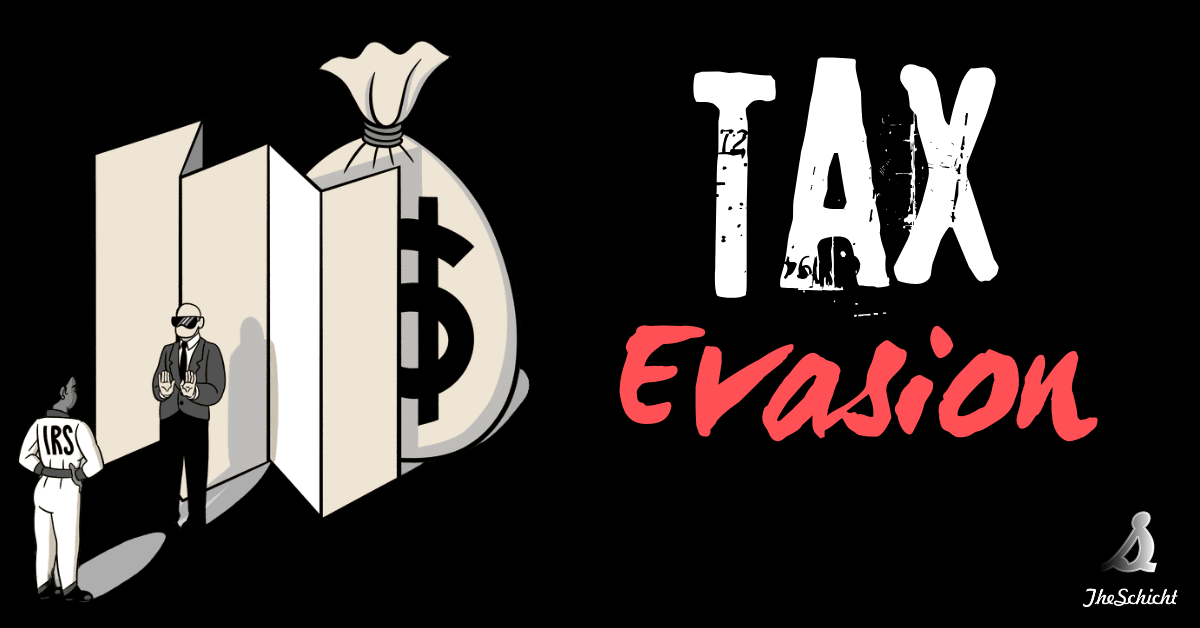
Tax evasion is one of the most clandestine and risky activities that undermines the financial health of economies worldwide. Despite extensive regulations and enforcement mechanisms, tax evasion continues to be a pervasive issue, often carried out in the shadows of the global economy. From small businesses to multinational corporations, individuals and entities alike engage in this hidden world, where loopholes and deception become powerful tools for those seeking to evade their tax obligations.
In this comprehensive exploration, we’ll dive deep into the hidden world of tax evasion, its methods, the motivations behind it, and the consequences for both those involved and society as a whole. By the end, you’ll have a clearer understanding of how tax evasion works, why it persists, and what can be done to combat it.
Understanding Tax Evasion: More Than Just Avoidance
Tax evasion goes beyond mere tax avoidance. While tax avoidance involves legal strategies to minimize tax liability (such as taking advantage of deductions and credits), tax evasion involves illegal activities designed to deliberately underreport income, overstate deductions, or hide assets. Unlike tax avoidance, which operates within the bounds of the law, tax evasion is an attempt to flout the law and escape paying what is owed.
The Methods of Tax Evasion: How It’s Done
The methods of tax evasion are as varied as they are ingenious. Tax evaders employ sophisticated schemes that often go unnoticed for years. Some of the most common tactics include:
Offshore Accounts: Many wealthy individuals and corporations hide their earnings in offshore bank accounts or shell companies in tax havens like the Cayman Islands or Switzerland. By doing so, they avoid paying taxes in their home countries.
Underreporting Income: One of the most straightforward methods of tax evasion is simply not reporting all of one’s income. This can be done by hiding cash earnings or failing to disclose additional sources of income.
Inflating Expenses: Another common strategy is inflating business expenses to reduce taxable income. By claiming more deductions than they’re entitled to, tax evaders can significantly lower their tax liabilities.
Falsifying Documents: In some cases, individuals and businesses go to the extent of forging financial statements or receipts to make it appear as though they have incurred legitimate expenses that can be deducted from their income.
Bartering and Informal Transactions: Bartering goods and services without reporting the transactions to tax authorities is another method used by some to evade taxes.
Why Do People Evade Taxes?
There are many reasons why individuals and businesses engage in tax evasion. Some of the most common motivations include:
Financial Gain: The most obvious reason for tax evasion is the desire to keep more money. For businesses, avoiding taxes can mean more profit to reinvest or distribute among shareholders. For individuals, evading taxes can result in significant savings.
Dissatisfaction with Government Spending: Some people evade taxes because they disagree with how the government spends tax revenue. This mindset leads to the belief that avoiding taxes is a way to protest or take control of their own financial future.
Perceived Lack of Enforcement: A lack of perceived consequences for evading taxes can encourage individuals and businesses to take risks. If they believe there’s a low likelihood of getting caught, they might feel more comfortable evading taxes.
Complexity of the Tax System: The complexity of the tax code can lead some to take shortcuts. Individuals or businesses may feel overwhelmed by the sheer number of rules and forms they must navigate, making it easier to hide income or misreport information.
The Global Scope of Tax Evasion
Tax evasion is not limited to a single country. In fact, it is a global problem that affects nations of all sizes. Developing countries lose billions annually due to tax evasion, which deprives them of critical funds needed to support essential public services. Meanwhile, developed countries face challenges with multinational corporations shifting profits to low-tax jurisdictions, further complicating enforcement efforts.
The Consequences of Tax Evasion
The risks associated with tax evasion are significant, not only for those involved but also for society as a whole. Some of the consequences include:
Legal Penalties: Individuals or businesses caught evading taxes face severe legal penalties, including fines, back taxes, and even imprisonment. The penalties for tax evasion can vary depending on the severity of the offense and the jurisdiction.
Damage to Reputation: Those caught evading taxes often face irreparable damage to their personal or corporate reputation. Public perception can turn negative, leading to loss of customers, investors, or opportunities.
Economic Impact: Tax evasion has a direct impact on public services. Governments rely on taxes to fund education, healthcare, infrastructure, and social welfare programs. When individuals and businesses evade taxes, these services suffer, ultimately affecting the well-being of society.
Increased Tax Burden on Honest Taxpayers: As more people evade taxes, the burden of paying for public services shifts to those who follow the rules. This can lead to an unfair tax system where responsible citizens end up paying more to cover the losses from tax evasion.
Combating Tax Evasion: What Can Be Done?
Governments worldwide are actively seeking solutions to curb tax evasion. Some of the measures being implemented include:
Improved Reporting Requirements: Many countries are introducing stricter reporting requirements, including regulations for banks and financial institutions to report suspected evasion.
International Cooperation: As tax evasion often involves cross-border transactions, international cooperation between tax authorities is crucial. Treaties such as the OECD’s Common Reporting Standard (CRS) aim to increase transparency and exchange information to identify offshore tax evasion schemes.
Public Awareness Campaigns: Governments are also launching public awareness campaigns to educate citizens about the consequences of tax evasion and the importance of paying taxes to support the economy.
Technological Advances: With the rise of data analytics, governments are better equipped to detect suspicious financial activity. Artificial intelligence and blockchain technology are also playing a role in identifying and tracking tax evasion.
Conclusion
The hidden world of tax evasion is complex, evolving, and highly impactful. From hidden bank accounts to false deductions, those who evade taxes exploit loopholes in the system, costing governments billions and undermining public trust. While significant efforts are being made to combat this issue, tax evasion remains a challenge that requires global cooperation, stronger enforcement, and continued public awareness.
If you’re interested in learning more about the complexities of tax evasion, the importance of tax compliance, and how it affects the economy, stay tuned for more insightful articles on financial responsibility and the global fight against tax evasion.
New Playground for Money Laundering: Exploring the Modern Threats and Solutions
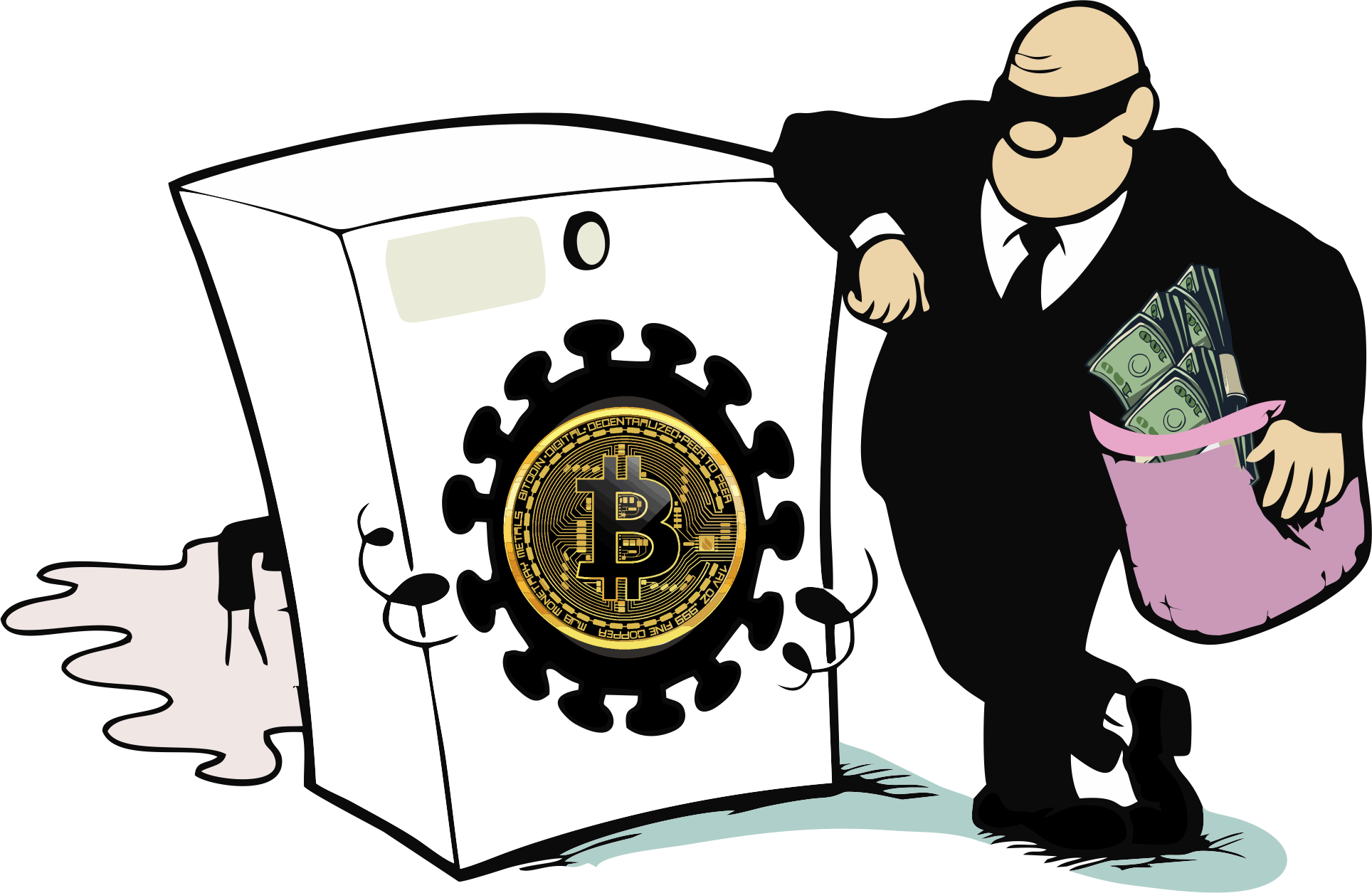
In the evolving world of finance, criminal activities such as money laundering continue to pose significant threats to both national and global economies. Over the years, authorities have made significant progress in cracking down on traditional forms of money laundering, but as technology advances, so do the methods used by criminals. In this article, we will explore the new playgrounds where money laundering is thriving, how these modern techniques work, the dangers they pose, and the regulatory efforts to combat them.
1. The Evolution of Money Laundering
Money laundering, at its core, is the process of disguising the origins of illegally obtained money, typically by means of transfers involving foreign banks or legitimate businesses. Criminals use a variety of methods to “clean” money—turning illicit funds into seemingly legitimate assets.
Historically, money laundering was associated with the physical movement of cash through underground networks, such as casinos, real estate transactions, and smuggling operations. However, with the advent of the digital age, the scope and complexity of money laundering activities have expanded. Today, technology provides a broader range of opportunities to obscure illicit financial activities.
2. The Rise of Digital Assets: Cryptocurrencies
One of the most significant developments in recent years is the use of cryptocurrencies for money laundering. Bitcoin, Ethereum, and other cryptocurrencies offer anonymity, decentralization, and the ability to quickly move large sums of money across borders without government oversight. These features, once seen as advantages of blockchain technology, have also made digital currencies an ideal tool for criminals seeking to obscure the origins of illicit funds.
How Crypto Money Laundering Works
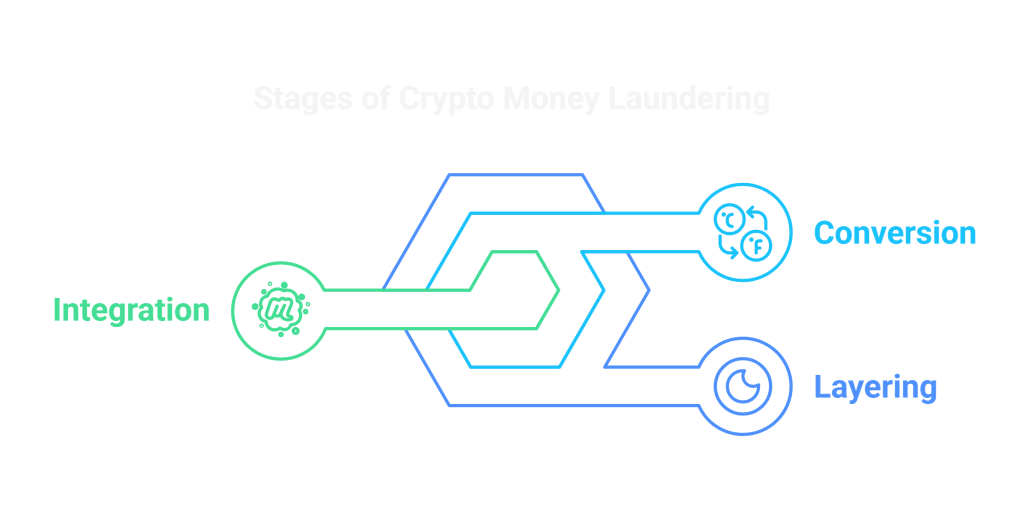
Cryptocurrencies, by their very nature, are pseudonymous. Although transactions are recorded on the blockchain, the identities behind the wallet addresses are often difficult to trace. This creates an opportunity for criminals to convert illicit money into digital currency and transfer it across borders without detection. The process typically involves three stages:
Layering: Criminals may first exchange dirty money into cryptocurrency through a process called “mixing” or “tumbling,” which obscures the origin of the funds by mixing them with others in a large pool.
Conversion: After the funds have been mixed, they are exchanged for other cryptocurrencies or converted into fiat currency through exchanges that may have lax Know Your Customer (KYC) protocols or no KYC at all.
Integration: Finally, the laundered funds are reintegrated into the financial system by purchasing legitimate assets such as real estate, luxury goods, or other investments.
3. Virtual Assets and Gaming: The New Frontier
Another emerging platform for money laundering involves virtual goods and gaming. The rise of online gaming platforms and virtual worlds, such as those found in massively multiplayer online role-playing games (MMORPGs), has created a unique avenue for illicit financial activities.
In these virtual environments, players can exchange virtual currencies for real-world money or goods, a process that can be exploited for money laundering. Criminals use the game’s economy to transfer illicit funds, buy in-game items or assets, and then sell them on the open market for real money. Similarly, the use of digital marketplaces, where users can trade virtual goods, has led to the growth of laundering activities. This method allows criminals to obfuscate the origin of funds through seemingly legitimate sales.
Key Techniques in Virtual Asset Laundering
Item Reselling: Players may buy virtual items or in-game currency with illicit funds and then resell them for real money, thus obscuring the funds’ original source.
Money Transfers via Gaming Platforms: By using gaming platforms that support microtransactions, players can send virtual goods as gifts or pay for in-game purchases with illicit money. The recipients may then liquidate those assets.
Trade-Based Laundering: Fraudulent trade or transactions between multiple accounts owned by the same individual are common. These transactions can artificially inflate the value of virtual goods or currency.
Cryptocurrency-Integrated Games: Some gaming platforms allow players to earn, trade, or spend cryptocurrency in exchange for in-game achievements. This integration facilitates the movement of illicit funds between various platforms.
4. Online Marketplaces and Peer-to-Peer Platforms
The rapid rise of peer-to-peer (P2P) platforms and online marketplaces like eBay, Craigslist, and even social media groups has provided new avenues for money laundering. These platforms enable individuals to buy and sell goods and services without much oversight. Criminals can exploit these platforms by using them to purchase and sell items with illicit funds.
In many cases, the sellers on these platforms may not know they are part of a laundering operation. Criminals may also use multiple fake identities to artificially inflate the value of items and conduct transactions. The anonymity offered by these platforms, combined with the speed and ease of transactions, makes them a popular tool for money launderers.
Common Tactics on Peer-to-Peer Platforms
Overpriced or Underpriced Goods: Launderers may list high-value items at low prices or vice versa, making the transactions appear legitimate while effectively transferring illicit funds.
Payment Redirection: Some launderers may sell items or services to a group of people with the intent of directing payment to a different account that they control, making the illicit funds difficult to trace.
E-Commerce Sites: Criminals can exploit e-commerce sites by selling high-demand products at inflated prices to “clean” money, often through fake reviews or the manipulation of ratings and feedback.
5. The Use of Offshore Financial Institutions
Offshore financial institutions have long been a target for money laundering due to their regulatory leniency, lack of transparency, and strict privacy laws. Criminals often deposit illicit funds in these banks to obscure the source of the money before transferring it to other accounts or jurisdictions. These institutions may not have strong KYC or Anti-Money Laundering (AML) procedures, allowing criminals to exploit these loopholes.
6. The Role of Artificial Intelligence and Machine Learning in Combating Money Laundering
While money laundering tactics have evolved with technology, the same technological advancements are also being used to combat these crimes. Financial institutions, regulators, and law enforcement agencies have begun to adopt AI and machine learning tools to identify suspicious transactions, analyze patterns of behavior, and detect anomalies in real-time.
AI algorithms can analyze vast amounts of data and highlight irregular activities that might otherwise go unnoticed by human investigators. Machine learning systems can learn from historical money laundering cases and improve their predictive models to identify potential risks. This proactive approach is helping authorities to stay ahead of increasingly sophisticated laundering operations.
7. Regulatory and Legal Measures: A Global Response
To counter the increasing sophistication of money laundering, governments and international organizations have stepped up their regulatory efforts. Financial Action Task Force (FATF), for instance, is an international body that sets standards for anti-money laundering (AML) practices and works with countries to ensure compliance. Countries are now required to implement stricter KYC protocols, report suspicious transactions, and cooperate with international authorities.
Key Measures and Initiatives
Stronger KYC and AML Regulations: Countries and financial institutions are adopting more stringent customer identification and verification processes. This includes enforcing AML laws, requiring businesses to monitor and report suspicious transactions, and enhancing due diligence on high-risk clients.
Blockchain Tracking: Given the anonymity of cryptocurrencies, various blockchain tracking tools have been developed to monitor and trace cryptocurrency transactions. These tools are helping authorities follow the flow of illicit funds across digital networks.
International Cooperation: Since money laundering is often cross-border, international cooperation has become essential. Authorities from various nations work together through bilateral agreements, international treaties, and joint operations to identify, investigate, and prosecute money laundering activities.
Conclusion
Money laundering has evolved from traditional methods involving physical cash into sophisticated digital and virtual avenues. The rise of cryptocurrencies, online marketplaces, gaming platforms, and offshore institutions has created a “new playground” for criminals to launder illicit funds. However, financial institutions, regulators, and law enforcement agencies are increasingly leveraging technology, including AI and blockchain tracking, to fight back.
As these trends continue to unfold, it is crucial for regulators to adapt to the changing landscape. Strengthening international cooperation, enhancing financial transparency, and utilizing cutting-edge technologies will be essential in combatting this global issue. The fight against money laundering is an ongoing battle, and as the techniques used by criminals grow more advanced, so too must the efforts to identify and prevent these illegal activities.
To provide the best experiences, we use technologies like cookies to store and/or access device information. Consenting to these technologies will allow us to process data such as browsing behavior or unique IDs on this site. Not consenting or withdrawing consent, may adversely affect certain features and functions.
Functional
Always active
The technical storage or access is strictly necessary for the legitimate purpose of enabling the use of a specific service explicitly requested by the subscriber or user, or for the sole purpose of carrying out the transmission of a communication over an electronic communications network.
Preferences
The technical storage or access is necessary for the legitimate purpose of storing preferences that are not requested by the subscriber or user.
Statistics
The technical storage or access that is used exclusively for statistical purposes.The technical storage or access that is used exclusively for anonymous statistical purposes. Without a subpoena, voluntary compliance on the part of your Internet Service Provider, or additional records from a third party, information stored or retrieved for this purpose alone cannot usually be used to identify you.
Marketing
The technical storage or access is required to create user profiles to send advertising, or to track the user on a website or across several websites for similar marketing purposes.